
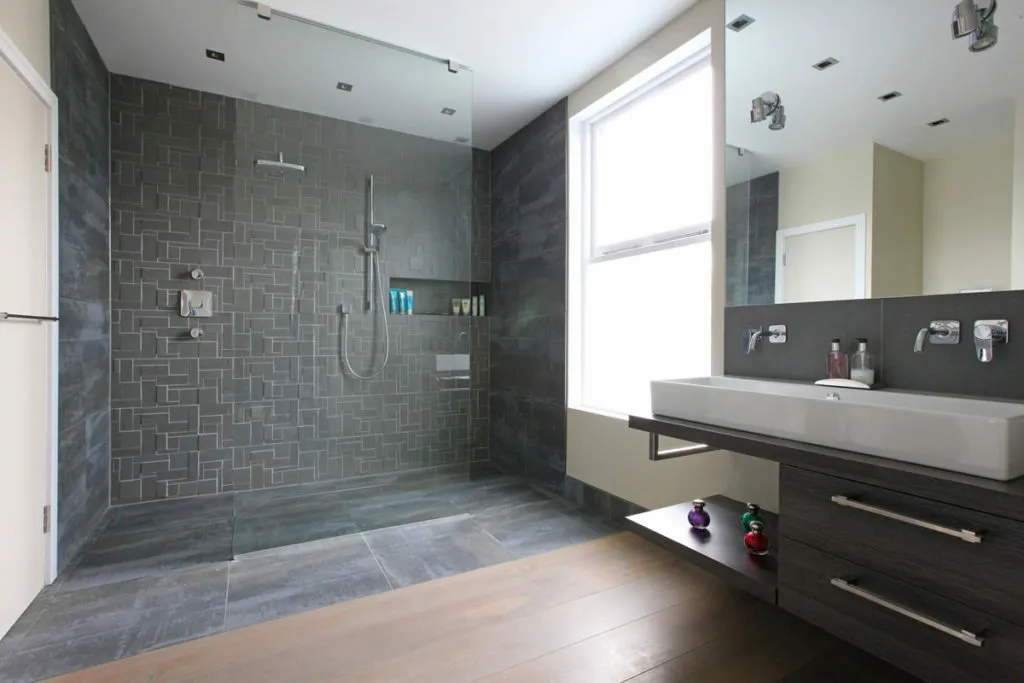
Man, showers get a beating every single day. You’re hitting them with scorching hot water, steam rolling in thick like the fog off Puget Sound on a drizzly morning, crazy temperature swings from that initial blast to the cool-down, and just the nonstop grind of daily use from everyone in the house. Homeowners barely give it a second thought until water starts seeping somewhere it shouldn’t or that musty smell creeps in. That’s exactly why, when you’re sinking time and effort into a custom tiled shower, especially right here in Seattle where dampness is our constant companion, longevity isn’t just a nice bonus. It’s the whole point.
I’ve been out there tiling showers across this city for over 20 years now, from cozy craftsman bungalows in Ballard to sleek modern condos up on Queen Anne. Let me tell you, a truly solid one isn’t some weekend warrior project or a quick surface spruce-up. It’s a complete, engineered system built to laugh off our endless rain, that bone-chilling winter humidity, and those misty mornings that make everything feel perpetually damp. Done right by someone who knows what they’re doing, these showers hold strong for decades, keeping your home dry inside and out, with zero drama or surprise repair bills. But if corners get cut anywhere along the way? You’re in for trouble a lot sooner than you’d ever expect, and it usually starts small before snowballing into a nightmare.
What's the Actual Lifespan You Can Expect?
In my experience tearing into showers all over Seattle, from family homes in Capitol Hill to investment properties down in Fremont, a professionally installed custom tiled shower typically runs 25 to 40 years without a hitch. And honestly, many go way longer than that. I’ve personally ripped out setups from the 1970s in older Ballard places that were still completely leak-free, no rot eating away at the studs, no mold hiding in the corners. Those were the ones built by old-school pros who understood the basics, like using cement backer board and simple but reliable waterproofing layers that just worked.
So what makes some showers crap out after only a handful of years? It’s never the tile itself, because quality porcelain or ceramic can literally outlast the house it’s in. No, the real culprit is always what’s happening underneath and behind it all. Things like the waterproofing membrane, the precise drainage slope, and how well the substrate was prepped from the get-go. Nail those elements down perfectly, and your shower stays rock-solid through seasons of heavy use. Skimp on any of it, and water starts sneaking in like an uninvited guest, quietly rotting the wood framing until one day you press on the floor and feel that telltale give, or catch a whiff of something off.
Let me paint a picture from a job I did last spring in Fremont. This homeowner had what they called a “custom” shower put in by one of those big-box remodel crews a few years back. On the surface, it looked sharp enough, nice clean lines and modern fixtures. But six years in, tiles were popping loose left and right, water pooling in weird spots under the pan base. When we finally dug in, the story was clear: they had completely skipped a full waterproof membrane, relying on just some basic sealant around the edges. It was a total redo from scratch. The lesson there sticks with every client I talk to now. Surface-level pretty means nothing if the foundation isn’t bulletproof.
Expanding on that, I’ve seen patterns repeat across hundreds of jobs. In neighborhoods like Wallingford or Green Lake, where homes are older and foundations shift a bit with our clay-heavy soils, poor prep leads to cracks forming early. Water finds those paths, and before long, you’re dealing with warped subfloors or insulation turning to mush. On the flip side, the showers I’ve built with meticulous attention to those hidden details? Clients call back years later, not for fixes, but just to say thanks because it’s still performing like day one. That’s the difference between a temporary patch and an investment that pays off for generations.
Tile Ain't the Whole Show, It's the Full System That Counts
So many folks come into the shop thinking tile equals shower. Big mistake. Tile is just the visible skin, the part everyone admires when they step in. The real workhorse is everything underneath: framing that’s perfectly straight and beefed up to handle the weight and moisture, a dead-on slope to channel every drop straight to the drain, at least a quarter-inch drop per foot with no exceptions, a rock-solid waterproof layer that seals it all in, flawless integration with the drain assembly, thinset mortar that bonds tighter than family, and expansion joints that let the whole thing breathe with the house’s natural settling over time.
At its core, the entire setup is engineered around one mission: total water management. Keep every bit of moisture contained behind the tile and directed efficiently to the drain, and your framing, subfloor, and walls stay completely dry for the long haul. Let even a little wander off course into the wood or drywall, and damage starts building silently, year after year, until it’s a full-blown problem. That’s precisely why modern custom installations outperform those old-school methods hands down, particularly in a place like Seattle where our climate throws constant moisture challenges at your home.
Think back to the 1970s showers around here. They were often just tile slapped over regular drywall with maybe some tar paper or a thin coat of mastic underneath. It held up okay in drier spots, but throw in Seattle’s relentless humidity and those overcast weeks where everything stays sopping, and it turned into a slow-motion disaster. Wood swelled, mold took root, and entire bathrooms needed gutting. Nowadays, we’ve got advanced tools like Schluter-Kerdi membranes or Laticrete Hydro Ban systems, either sheet-based overlays or liquid-applied barriers that create an impenetrable seal with no weak seams. Combine those with moisture-resistant boards like Wedi or HardieBacker, and you’ve built a fortress that shrugs off our winters without breaking a sweat.
I’ve put these systems to the test on all kinds of projects, from tiny powder rooms in Phinney Ridge apartments to sprawling master suites in Medina estates overlooking the lake. They handle the daily blasts from high-pressure rain heads, the steam from long soaks, and even those rare deep freezes we get, without flinching. The key is layering it right, testing every step, like flooding the pan before tiling to confirm the slope and seal. Skip that, and you’re gambling with your home’s future.
Waterproofing, The Absolute Make-or-Break Hero
If I could boil down the one factor that decides whether your shower cruises to 30 years or fizzles out at 10, hands down it’s waterproofing. The old construction tricks around here often allowed tiny amounts of water to seep through grout lines or around fixtures, right into the walls and floors. Over time, that constant drip-drip built up mold colonies, rotted out studs and joists, and turned solid structures soft. I’ve cut into countless walls over the years and seen the same heartbreaking story: insulation clumped like wet newspaper, wood fuzzy with decay, all from moisture that should never have been there.
Modern approaches flip the script entirely. They create a continuous, seamless waterproof barrier applied directly to the substrate before any tile goes down. You can roll or trowel on liquid membranes that cure into a flexible, tough-as-nails shield, or install pre-fabricated sheets that overlap perfectly like armored scales on a fish. Done strictly by the manufacturer’s specs, two full coats minimum, with every seam taped and tested, water doesn’t stand a chance of penetrating. Instead, it’s all funneled straight to the drain, keeping the structure pristine.
What makes this such a game-changer specifically in Seattle? Our ambient air hovers around 70 to 80 percent humidity most of the year, and folks crank those showers extra hot and steamy to chase away the gloom of gray skies. Poor waterproofing in that environment is just asking for rot to set in fast. But when it’s installed correctly, I’ve had clients from Laurelhurst reach out after 25 years to say their shower is still flawless, no odors, no soft spots, just reliable performance. They often wonder if they should swap the faucet for style, not function.
One extra tip from the trenches: Always incorporate a bonded drain system. It fuses the membrane right to the drain flange, eliminating any potential leak points right where water pools deepest. I’ve never had a failure from those.
Installation Quality, Where Pros Shine and Amateurs Flop
Have you ever looked at two showers that appear identical from the outside, yet one is falling apart while the other looks freshly done? The answer is always in the installation quality. It’s those hidden details that demand precision: dialing in the perfect slope so water races away without a single puddle, reinforcing corners with extra backer board or metal lath for stability, selecting thinset mortar perfectly matched to your tile type, like an E90-rated flexible one for glass or mosaics, and then patiently allowing full cure times of 24 to 48 hours before grouting or stressing it.
Amateurs rush through, eyeballing levels and skipping tests. Real pros treat it like surgery. I can easily spend half a day on prep alone, shimming the pan base perfectly, running laser levels across every surface, double-checking slopes with a four-foot straightedge and a garden hose flood test. On one job in Fremont years back, the subfloor was off by just a hair, barely noticeable to the untrained eye. If left alone, it would have caused chronic ponding and early failure. We fixed it on the spot, and that shower has been going strong ever since 2012, handling a family of five without complaint.
In high-traffic Seattle homes, like rentals in Belltown or busy family pads with teenagers pounding through morning routines, this level of precision pays massive dividends. No subtle movement means no grout cracks spidering out, no tiles delaminating from the back, no slow leaks developing over time. It’s the difference between a shower that whispers along quietly and one that starts yelling for attention way too soon. Experienced installers live for these details because we know they’re what turn a good job into a legendary one.
Picking Tiles That Go the Distance For Real
When it comes to choosing tiles, the decision impacts your maintenance routine and how the shower ages visually far more than its structural lifespan, assuming everything else is installed right. Porcelain and ceramic tiles remain the gold standard for showers everywhere. They’re incredibly dense and non-porous, with PEI ratings of 3 or higher making them perfect for wet zones, naturally repelling moisture and standing up to constant abrasion from loofahs, scrub brushes, and foot traffic.
I’ve got a West Seattle project from 2005 with glass subway tiles that still gleams like new, no chips, no haze. Natural stone options like marble, slate, or travertine bring that warm, organic character so many Seattle homeowners crave for a spa-like retreat. They look and feel incredible, but they’re more demanding. Hard water minerals around here, especially near Lake Washington, etch the surface over time, so you need to seal them every six to 12 months with a penetrating impregnator like a quality stone sealer. Done consistently, stone lasts as long as porcelain. Neglect it, and staining sets in fast, shortening the aesthetic life.
Glass tiles make stunning accents or full feature walls, adding depth and light reflection that pops under our overcast skies. But they’re finicky partners, requiring flexible epoxy thinset for secure bonding and precise grout spacing to handle thermal expansion without cracking. Mosaic sheets work beautifully in curbless or sloped pans, creating seamless flow, but grout joints must be tight and flexible to avoid issues.
The smart play is always balancing your design dreams with practical realities. Love that marble vein pattern? Go for it, but commit to the upkeep. For low-maintenance Seattle families juggling rainy commutes and kid chaos, porcelain that mimics stone perfectly delivers the look without the weekly ritual. Either way, with pro installation, the tiles themselves rarely need replacing.
Grout, Cracks, and Keeping Everything Stable
Grout takes way more blame than it deserves. When you see cracking, crumbling, or discoloration, it’s almost never a grout failure on its own. It’s usually movement in the substrate below or moisture pushing up from behind, stressing the lines until they give. Back in the day, traditional sanded grout was brittle as glass; splash it with water repeatedly, and it powdered out fast.
Modern products have evolved massively. Unsanded epoxies, polymer-modified cement grouts, they’re flexible, stain-resistant, and built to flex with minor house shifts. Pair them with a dead-stable base and impeccable waterproofing, and grout performs reliably for 20 years or more. I swear by Mapei Keracolor U for most shower jobs; it mixes smooth, cures with give, and holds color through bleach-free cleanings.
Expansion joints are non-negotiable in my book, placed at every corner, ceiling transition, and where the shower meets dissimilar materials. Seattle’s expansive clay soils heave with heavy rains, causing houses to breathe a bit. Ignore joints, and cracks form. One Magnolia client skipped my advice early on. Five years later, hairline fractures webbed across the walls. We regrouted, added proper joints, and it’s been solid ever since. Stability starts from the inside out.
Everyday Maintenance, Your Secret Weapon For Extra Years
Even the finest custom shower I’ve ever built needs some basic love to maximize its run. Grab a squeegee and swipe it down daily, takes all of 10 seconds after your shower, prevents water spots and mineral buildup. Weekly, hit it with pH-neutral cleaners, a simple baking soda and vinegar paste, or store-bought Tilex mold spray, steering clear of harsh abrasives that etch the surface.
Ventilation is king here in Seattle. Run the exhaust fan for at least 20 minutes post-shower, or crack a window if you’ve got good airflow. Our muggy air amplifies trapped steam, leading to hidden moisture. Address niggles immediately: a dab of fresh caulk on yellowing seams annually, spot-repair any loose grout specks before they spread.
Homeowners always ask if this stuff really extends life. Absolutely. I’ve witnessed showers push past 40 years because diligent owners stayed proactive, never letting soap scum cake up or ventilation lapse. Busting a myth quickly: Steam doesn’t “kill” grout by itself. It’s poor airflow combined with waterproofing gaps. Upgrade to a humidity-sensing fan for effortless wins.
Expand that routine seasonally, too. In winter, when indoor heat dries the air unevenly, extra humidity checks prevent cracks. Summer? Blast the fan harder after long soaks. Small habits compound into decades of trouble-free use. Think about integrating smart home tech too, like auto-fans triggered by moisture sensors, making maintenance even more hands-off while you sip coffee through the drizzle.
Seattle's Weather, Why It Punishes and How to Fight Back
Nobody understands moisture like Seattleites. Our showers face unique battles: exterior drizzle infiltrating via sloppy window flashing, indoor humidity spiking from wood fireplaces or holiday cooking, basements wrestling groundwater pressure. Custom tile systems thrive when tailored to this reality, with oversized weep holes in drains for quick evacuation, vapor barriers on exterior walls, and membranes rated for constant damp exposure.
Contrast that with sunnier spots like Phoenix, where heat expansion cracks dominate worries. Here, rot rules. My installs incorporate smart extras like jump ducts venting steam to the attic, or integrated dehumid paths. Clients in Laurelhurst homes rave about zero issues even through the brutal 2021 freeze-thaw cycle that wrecked lesser builds.
Climate-specific material choices seal the deal. Avoid rigid foams in soggy crawlspaces; opt for drainage mats under pans. Pros who cut teeth on local jobs know this instinctively, adapting techniques honed over rainy seasons to ensure every layer breathes yet seals tight against our Pacific Northwest reality.
Spotting Trouble Before It Turns Into a Flood
The best showers don’t fail overnight; they give gradual heads-ups. Watch for persistent funky odors hinting at mold behind walls, tiles that clack loosely when stepped on, cracks forming at door jambs or ceiling edges, mysterious water stains on adjacent drywall, or a subtle squish underfoot on the slope. Soft subfloor spots scream urgency.
Not every sign means demo day. Odd smell? Borrow a borescope camera to peek grout lines or voids. Loose tile? Inject epoxy from behind to re-secure. But if leaks persist or water meters detect hidden flow, bring in experts fast. I’ve consulted on dozens of fails; 80 percent trace back to skipped waterproofing. Catching early slashes repair scope dramatically, often turning a potential gut job into a simple tweak.
Learn the patterns too. In older homes, check transitions where shower meets tub or vanity, common weak spots from settling. Newer builds? Eyeball caulk lines around frameless glass, where silicone can degrade under constant steam exposure.
Design That Doesn't Date Itself Fast
Plenty of showers get ripped out not because they broke, but because they scream “2005 trends.” Wild neon glass mosaics or overly bold patterns lose appeal quick. Timeless choices endure: soft gray subway tiles, crisp white porcelain, matte black fixtures blending seamlessly.
Layouts matter too. Curbless pans with hidden linear drains feel modern forever, unlike dated high curbs. Plan for the long game: minimum 36-inch width for comfort, handheld shower wand for accessibility, built-in benches for aging in place without regret. Seattle folks crave that resort escape but practical too, rain heads paired with body jets that stay stylish across decades. Mix textures subtly, like matte tiles with glossy accents, for depth that evolves rather than expires.
When to Bite the Bullet on Full Replacement
Only gut it if waterproofing integrity is compromised, confirmed by flood testing showing penetration, or structural rot has compromised joists. Purely cosmetic refreshes handle the rest: fresh grout lines, new caulk beads, updated fixtures breathe new life without touching walls.
High-end custom systems shine here, often modular for targeted repairs. No need to demo everything for a membrane patch or drain tweak. Weigh options carefully, consulting pros familiar with Seattle’s code updates on vapor barriers and accessibility.
Real-World Lifespan Breakdown
Budget or DIY efforts fizzle at 5 to 10 years from foundational shortcuts. Average contractor work holds 15 to 25 years, functional through normal cycles. Pro custom with modern waterproofing and detail obsession? 30 to 40 years routine, often more.
Boosters include vigilant maintenance, water softeners, curbing mineral deposits, whole-home dehumidifiers in humid basements. Track record proves it, with many Seattle showers from quality crews still kicking after half a century.
Planning Your Forever Shower
No two homes match perfectly. Sloping Phinney Ridge lots demand reinforced pan supports, lake-view pads prioritize frameless glass harmony. Kick off with a deep consult: inspect substrate condition, test water chemistry, mock up 3D visuals for buy-in.
In Seattle, trust locals like NWtile who breathe the climate. They source vapor-permeable yet waterproof materials, back it with long warranties, and approach every job as infrastructure, not a fleeting reno. When craftsmanship meets strategy for a shower that feels permanent, reach out to established pros like NWtile, where showers are built as complete systems rather than surface upgrades. Craftsmanship, planning, and proper materials come together so it doesn’t feel like something you’ll revisit in a few years. It just feels right, forever.

Common NW tile FAQs
How long do custom shower tile installations usually last?
25 to 40 years standard with pro work and care, many exceeding 50.
Is tile replacement common in showers?
Rare unless direct damage; issues stem from system failures beneath.
Are custom shower tile installations suitable for Seattle homes?
Perfectly, when dialed for our wet climate, outperforming off-the-shelf units.
Does grout need regular replacement?
No rigid timeline; solid installs endure decades, refresh on visible wear.
Is a custom shower tile shower better than prefabricated options?
Superior longevity, tailored fit, seamless design without mold-prone joints.


One Response
Really appreciate how you called out the daily wear showers take—most homeowners underestimate how much steam and temperature swings add up over time. Your point about Seattle’s constant dampness influencing longevity is spot-on, too. It’s a good reminder that proper installation isn’t just about looks but about building something that can handle years of moisture without issues.